9.17.2010

How Doctors Think: The Role of Evidence Based Medicine

Think of the last time you went to the doctor. ( If you're anything like my dad, you've put it off for eons, pledging something like "I'll go and get my cholesterol checked after I get back into my regular exercise routine - you know, make the results more realistic,"...every three months.)


 Maybe you dreaded the encounter, wondering if that extra piece of cheesecake - consumed against the counsel of your stern inner food-guardian last week - might tellingly manifest to the physician-detective in your blood pressure, weight or blood sugar reading. Maybe you went because you ran out of your medication - and exhausted that convenient telephone-refill option where you didn't have to see anyone in person, darn it! Maybe it you needed a quick fix for something urgent - a rash, a nagging ache, a high fever. Or maybe you went because you actually like going to the doctor...and it'd been a while, and you want to be proactive about your health. (And you also eat 6 servings of vegetables daily, file your income tax return several months before it's due, stick to a grocery list and never lose pens. We physicians tend to love you.) 


Your doctor probably saw you, was hopefully pleasant and cordial, maybe clucked a little bit at your still-high blood pressure or lab tests, adjusted some medications, perhaps asked you how life was going. Maybe reminded you to lose some more weight, stop smoking, eat better. You nodded and maybe squirmed, remembering that dinner date at the fondue restaurant you have on Friday.  


And done - no more doctor visits for another year, phew!


But have you ever wondered: how, exactly, do we know what needs to be done to fix your symptoms? 


In other words: why is it that sometimes, you feel absolutely lousy, with aches and pains everywhere and just know you need an antibiotic to make this go away, and your doctor  tells you to take Tylenol and return if things don't get better? Or, why, when you go visit your doctor to check on that mild headache you've been having for a little while (mostly in the hope that your wife will finally stop nagging you), they order an immediate head scan and send you to a specialist? 


Technically, the answer requires going to medical school (and is apparently worth an average $250,000 and change). But the basic recipe is not in fact that mysterious. Doctors base many of their decisions on the results of scientific studies, also known as "evidence-based medicine". 


In the world of Western medicine, evidence-based medicine is King. 


It's why, when Over-Enthusiastic Resident pipes up during rounds in the hospital with a suggestion to order a certain lab test or change an antibiotic for a patient (not that this happened to, say, me or anything),  the attending raises an eyebrow and questions: "Really? What did the latest study show about that option?" 


The studies usually have hokey - I mean, catchy - acronyms like ASPIRE, HOPE, POISE to increase Google-ability and promote easy recall, so that Know-It-All Resident (who carries the "Scientific Study Update Alert" app on his PDA and an e-mail account dedicated to late-breaking medical study news)  can neatly chime in: "Well, Dr. Intimidating Attending, the UTOPIA trial showed that there was a 40% reduction in all-cause mortality when Drug Miracle was given compared to placebo." And the attending beams with satisfaction (while Over-Enthusiastic Resident wonders when she can sneak away to the nutrition room to grab graham crackers.) 


EBM inspires a knee-jerk reflex. Discuss whether to order an x-ray, prescribe an antibiotic, take a multi-vitamin every day, get a prostate exam: "What does the evidence show?"  On the flip side, appending the magic phrase "According to Widely Accepted Clinical Trial X," to your treatment plan highly increases the chance of being taken seriously.


EBM is how doctors know that when your cholesterol is a certain value, it's time to start the statin. It's how they know whether or not they should order an MRI for that low-back pain or just reassure you that it will go away. It's how  they know the prognosis for a cancer, make a decision that women under 40 don't need mammograms, that the 3-year old with an earache doesn't need antibiotics. 
The prevailing reign of Evidence-Based Medicine is why, sometimes, things that may seem like "common sense" to the general public are announced as ground-breaking findings on CNN.  ( "New study shows that eating food reduces hunger," "Study suggests sleep-deprived residents make more mistakes in treating patients.") 

This is mostly because sometimes, things that may seem like common sense to us aren't in fact borne out by EBM. ("Study suggests no benefit to daily multi-vitamin," or "Cancer patients practicing "positive thinking" do not have better outcomes, according to new study,") 


The best studies analyze health outcomes over large groups of people, hopefully a group of people which are similar to the type of patients the doctor treats. (If the study group consisted of 90% African-Americans and few Asian people, you might wonder if the results of the study could apply as well to Asians.) When a well-designed study finds, for example, that patients with high cholesterol treated with a statin had a 50% reduction in their "bad cholesterol", that might motivate a physician to prescribe that drug for you when you have high cholesterol. 


(Warning: there are many, many caveats to interpreting studies - which will come in later posts. As a preview: statins are now the topic of some controversy - even though they are linked to reduced cholesterol buildup in arteries, not much evidence supports the notion that statins prolong life in patients who don't have known heart disease. In evaluating a study, one needs to ask: what health outcome matters most? Living the longest number of years? Avoiding a heart attack? Living a chest-pain/disability-free but maybe shorter life? Avoiding side effects of chronic medication, even if it means maybe increased chance of a heart attack? Controlling the lab test result to normal ranges? You get the picture....it's complicated.)


The key point is that the treatment for an individual patient is governed mostly on results seen in groups of people in studies - who may or may not be very similar to you. An intelligent physician will, of course, use 'clinical judgement' in deciding whether the results are relevant to your particular case. (Sometimes, well-meaning but very very insistent moms or siblings insisting upon an antibiotic will heavily influence this 'clinical judgement'.)


In fact,  individualizing treatment is arguably where the true "art" and "skill" of medicine really lies. All physicians can read a study, but skilled physicians intelligently interpret the findings and know how to tailor treatment for a particular patient's case.


EBM can be a good thing: It reduces inconsistencies and impulsiveness from the process of treating patients (things you don't want in your rational, intelligent physician-treater). It lends external support and validation to our choices. It provides justification for why we make certain decisions. And it allows us to sort with logic through the maze of drugs, treatments, tests and options we have to make you feel better. 


It can also be a less-than-good thing. For a rushed physician, EBM can become a substitute for thinking about you, individually - your personal situation and environment. (Example: if people in a study got better after taking a new drug every day for 6 months, but Patient X in the doctor's office just lost his job and might take the drug only once a week because he can't afford it, would the drug still work? Or could sporadic use even cause harm?) It can encourage "cookie-cutter" medicine. And if the studies that guide our decisions are incomplete, flawed, or suffer from conflict-of-interest issues,  then health is potentially undermined. 

This last point is troubling. Take
Vioxx:  a medication widely used and prescribed for pain and inflammation from 1999-2004 after selectively published studies (released by Vioxx drug manufacturer Merck) touted its purported effectiveness with fewer side effects. In 2004, the drug was pulled off the market after a study showed Vioxx may have provoked 27,000 heart attacks and deaths. Leaked emails and studies uncovered in the ensuing lawsuit revealed that that Merck executives had known about the troubling heart attack findings three years earlier - but had not released the data to the public. 


Vioxx was the center of a major scandal, but truly frightening is the unpublicized subterfuge that is strikingly commonplace in medical literature. Take the practice of ghostwriting of medical studies, referring to  "pharmaceutical companies secretly authoring journal articles published under the byline of academic authors."  Often, authors of the article are listed as respected academic physicians from top-notch university medical centers- inspiring readers' trust in the quality of the study - but are actually written by pharmaceutical-company researchers. And policies against ghostwriting are strikingly sparse: A February 2010 survey in PLoS Medicine revealed that only 20% of the top 50 academic medical centers in the U.S. carry regulations or rules against ghostwriting. The result:  fatal flaws in the objectivity of published research -  those very studies that residents/medical students/experienced physicians/hospital staff use to guide their clinical decisions.


Digressions aside, how is this discussion of EBM relevant to public health? 


First of all, public health training lays the essential skills for constructing high-quality, sound EBM on a population level.  Public health training is centered on learning how to study disease patterns and study its effects, properly designing and conducting a clinical trial, and - crucially - how to interpret and analyze the results of a study published in a scientific journal and apply such results. Things that you would, ideally, want your physician to know well. 


(Unfortunately, most physicians in the U.S. do not receive rigorous training in public health, apart from a cursory lecture or three during medical school, and maybe some exposure in residency if they seek it out. A troubling health issue in itself - but much more to come on that in a later post.) 


But the second, crucial and likely counterintuitive point, is that public health actually inspires physicians to think about you as an individual. It inspires your treatment plan to be tailored to your circumstance, to your specific situation. It inspires the "art" of medicine. 


Think carefully about this second point. Most people, if they happen to know what public health involves, will say "Public health is studying health of populations." Many public health students will say, "Public health is studying health of populations."  Before I began studying at Berkeley, I said, "Public health studying health of populations."  


I still say confidently that public health involves studying the health of populations. But in thinking and studying about health from a population angle, something happens. 


It's the realization that treating disease successfully requires understanding the context of the individual. 


Public health icon Dr. Roy Acheson - founder of Yale's department of chronic disease epidemiology and the Rockefeller Foundation's International Clinical Epidemiology Network - enunciated the crucial question of public health: "Why did this patient get this disease at this time?"  


Here's a little example. Thousands of germs float around the air every day. The germs that cause coughs and colds will invariably end up on our hands, in our noses, maybe even inside our throats where they can multiply and produce that tell-tale scratchiness that leads to a full-blown cold. 

But while some people come down with a cold, others with that same bug don't end up getting sick, even though that germ is nestled right where they could wreak mucus-y havoc.  


It goes on. Some women with a gene for breast cancer won't end up getting the disease, while others with the gene will get breast and ovarian cancer before the age of 30. Someone who smokes for 80 years escapes lung cancer, while someone who smoked irregularly for 5 years dies of cancer after 2 months.  Some people who take a drug for blood pressure respond immediately, while others are on 10 drugs. 


What causes some people to get sick and not others? What causes some people with a gene to get a disease but not others; some people to respond to a surefire treatment and not others?  Why do African American males die from cancer at nearly 75% higher rates rate than Hispanic males? Why are a greater proportion of poor people also overweight? Why do residents of Japan live nearly 20 years longer than Americans? Why is providing vitamin A supplements to Ugandans suffering from vitamin-A-caused night blindness not effective? 


It all goes back to that question:  "Why this patient, why this disease, why at this time?" Unlocking the answer requires linking the population health patterns evident in EBM to the "real-world", individual experience of disease. It is public health's central puzzle; figuring it out is an essential step in creating a prevention and treatment strategy that boosts health


So now that you're hopefully on board with the public health parade, I'll continue to share insights here as I begin the lengthy task of cracking the health puzzle. As a preview to what's coming next: it turns out that the social and environmental factors play a larger role in disease than one ("one" meaning my naive pre-public-health self) might think. 


9.12.2010

Public Health, Defined...

What's a surefire way to instantly animate a seemingly quiet public health professional? Ask them what public health actually is. 

Like "hipster", "centrist" or "slow food", it's one of those nebulous things you think you know, but maybe not.  My public health professors here seem determined to make sure we accurately understand what we're getting into. In the Powerpoint-governed dictatorship of modern education, Slide #1 of about 10 lectures thus far consistently asksd "What is Public Health"? 

It's actually an interesting question to ponder - especially since most people apparently don't. In fact, a recent survey conducted by the Public Health Brand Identity Coalition found that 80% of Americans "did not think that public health had touched their lives in any way." 

But as Berkeley healthcare journalism lecturer David Tuller notes, that's the point of public health: to be invisible. 

Successful health interventions prevent bad health forces from happening - in fact, making them so rare that they're just historical curiosities, or plot elements of an action movie.


In the U.S., we don't habitually wake up each morning thinking of all the water-borne diseases or diarrheal outbreaks we're escaping as a result of sewage systems, or gleeful that our risk of contracting polio hovers below 0.001%.  But those vaccine campaigns which have rendered smallpox virtually extinct, and the late 19th-century movement in the United States to establish sanitation systems are silent successes of public health. 

We are often acutely aware when public health intervention is needed - when the system is "failing": We notice when eggs are pulled off the shelves, when there's a violent shooting in a public school, or when a hurricane devastates a city and its residents need help in the face of a chaotic, disorganized response. 

Likewise, doctors may not miss the cases of childhood mumps or hookworm outbreaks - diseases generally prevented by effective public health interventions.  But most practicing physicians sense that they seem to be treating a lot more patients with high cholesterol, obesity and diabetes, or that more of their patients can't pay for their healthcare. They diagnose pregnancy in a fifth-grader coming to clinic with abdominal pain and swelling in inner-city Detroit, life-threatening skin infections in a 500-pound patient who couldn't bend over to properly clean himself, tuberculosis in a homeless uninsured man who can't afford the drugs needed to treat him (and prevent its spread to others). 

 These health issues arise from population-level root causes:  they fall under the purvey of "health", and the mission of a public health professional is finding effective measures to prevent them from happening. 

Dr. George Benjamin, director of the American Public Health Association and emergency-room physician (quoted in Dr. Tuller's article), explains the distinction between individual treatment and population-wide prevention as follows. "I tell people that when someone would come into the room with a rat bite, I took care of the rat bite...if ten people came in with rat bites, the best public health intervention I could do would be taking out the rats - solving the problem versus providing clinical care." 

So how do we take out the rats?  

History describes champion "rat-killers" in the field of preventing diseases spread through water and food: think turn-of-the-century hookworm epidemic among farmers in the Deep South, virtually eliminated by installing outhouses; or London's 1854 deadly cholera epidemic, subsequently halted after a polluted water pump was removed.  

Such measures are still sorely needed around the world -  2.6 billion people have no access to sanitation systems, and a third of the world's population system lives in slums. 

But in addition, in both the developing countries experiencing fast economic growth and in wealthy countries, a rising modern epidemic features "lifestyle" or "chronic" diseases as the villains: heart disease, high blood pressure, diabetes, lung disease, cancer. These diseases are now the leading cause of death worldwide - 35 million people, or 60% of deaths around the world - and 80% of deaths from chronic disease occur in developing countries. A key point: in a number of cases, the massive disability and death caused by lifestyle diseases is preventable.

The public health-oriented, practical solution to this emerging global modern epidemic is complex. Take obesity, for example. Its status as well-traveled highway to the land of "lifestyle" disease - implicated in everything from lung disease to diabetes - makes it a modern, high-priority public health target. (In case you weren't convinced, here are some facts and figures detailing America's obesity epidemic. Notable fact: 2/3 of Americans are currently overweight.)  

But how, exactly, do you go about preventing obesity? Telling doctors to remind more patients to eat healthy? Taxing soda? Giant warning labels on Twinkies

 The "pyramid" of public health impact, as explained by the Centers for Disease Control and Prevention director Dr. Thomas Frieden, sheds some light on the practical design of a public health strategy.

In thinking of approaches to fix a population-level issue, fact #1: All the levels in the pyramid are essential to health. 

With that said, as public health strategies move up the pyramid, those near the tip require more effort and carry a smaller impact on a population scale. (Even though it could still be an important, dramatic impact for a small group of people.)  If doctors were to counsel every single patient they saw in clinic on eating  healthy and exercising, for example (top tier) or give overweight patients a weight-loss drug (tier 2 or "clinical intervention"), the impact on health would depend on 1) overweight patients actually coming to the clinic and 2) patients willing and able to follow the counseling advice and treatment. 

Unfortunately, losing weight is tough. Eating healthy is hard when you're hungry, have a five-dollar bill in your pocket, and are faced with a choice of a cheap, filling fast food fix versus a raw apple costing $1.50. Taking a weight loss drug is difficult when it causes "icky side effects", and costs $50 per pill.  

What if you began an approach which promoted healthy eating in people before they became overweight - ie. young children in elementary school, who seem naturally capable of burning 30,000 calories a day - with healthy eating campaigns and nutrition education? This would fall under the "long lasting preventive intervention" category (tier 3)- a one-time intervention which, if all goes well, might prevent habits that could lead to obesity and ill health. 

The potential impact, while broader in scale than the approach of individually counseling or treating already-overweight patients, still depends on 1) how many schools are able to implement the program 2) the quality of such a program and 3) the durability of the program's message in influencing a child's future eating habits. 

Now imagine if people naturally made the choice to eat healthy because it is easy to do so. That is, healthy food is readily available, cheap and tasty - becoming a more "default" option than junk food.   An approach leading to this outcome - such as removing junk-food or soft drinks from schools or taxing junk food - would "change the default environment", reduce the number of unhealthy calories consumed, prevent obesity and have a potentially far-reaching impact for community health.  

The problem is, the things needed to create this 'changed default environment' are precisely the most controversial. They require laws, rules, regulations and taxes - all words that often inspire distaste in the minds of the voting public. They make public health the bad guy. (Would you want to be the one who outlawas deep-fried chicken from the American diet? I'm thinking death threats.)  Exhibit A, B, C: the backlash on smoking bans; the public disapproval over a proposed junk food tax; or the huge battle over healthcare reform. (How does healthcare reform change the default context? By providing more people with insurance, universal access would remove a  contextual "barrier" which damages health, thereby provide a default entry into the healthcare system for sick patients.) 


What about the base-tier - addressing the socioeconomic factors?


As this is the level in which I'm most interested, you can expect several future posts about the scope for public health in this area. But for now, a quick preview:


Clearly, there is a powerful between socioeconomic status and health - in rich and poor countries alike. Things that improve living conditions will, logically, improve health on a profound scale. We're already familiar with the impact of a successful base-tier public health strategy: providing poverty-stricken areas access to clean water. (In the United States, sanitation improvements introduced in urban areas in the 1900s likely drove mortality down by nearly 50%.) 


But the relationship between socioeconomic status and health goes beyond the increased chance of contracting tuberculosis or becoming malnourished among poor residents. Inequality, as well as absolute poverty, causes disease. In the United States, a country characterized by large gaps separating the rich and poor, residents of poor communities are more likely to be shot, smoke, not know how to read, be overweight and die much earlier - a staggering 35 years earlier in some counties, as a Harvard study showed. (More - much more - to come on this in future posts.). 

Addressing the persistent, socioeconomic issues currently affecting health in the U.S. - inequality, the disturbing and complex relationship between class, race, violence in urban areas, educational gaps, crime and homicide - is daunting, to say the least. But it is a key priority for social justice and, as you now know, it is a key priority for public health.


The base tier of this pyramid also happens to be why I decided to come back to school and study public health. Other than good intentions, a remarkable ability to ramble, and some mad typing skills, I don't possess much in the way of a useful skillset, at present, to combat the specter of poverty and health.


But I'm a fast learner. And if there ever was a place for do-gooding, activism, and training practical idealists, the Bay Area has to be its capital.


I'll keep you posted. In the meantime, off to study some statistics....taking it one day at a time.

9.04.2010

In Search of The Perfect Smoothie

How do you improve health?

About nine years ago, I quit my job in investment banking and went back to school to study physics and organic chemistry. In the morning, I studied batteries, circuits and resistors; in the afternoon, I spent three hours wizarding with strange liquids in beaker-shaped flasks, heating, mixing, measuring and freezing various chemical concoctions.

Understanding why my microwave invariably conked when I turned on my hairdryer, battling "goggle-face", and navigating the terrorizing uses of the word 'titrate' were the apparent stepping stones to a dream: improving health.

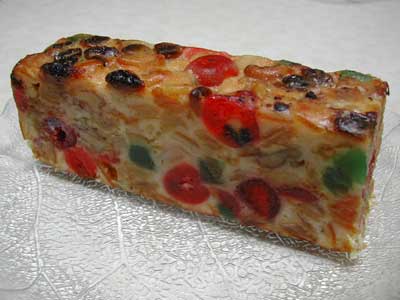
This dream - this idea of improving health - nestled within a cozy little niche in my stubbornly idealistic personality. Coming from the world of ergonomic mesh swivel chairs, Office Depot bulk orders and Ann Taylor structured jackets, "improving health" shone as pure, gleaming Achievement. It was a vibrant Vitamix-quality smoothie of do-gooding and impact; so virtuous, it boasted probiotics and blue-green algae. Investment banking, on the other hand, was an overmixed fruitcake. Deceptively pretty to look at - if a bit gaudy with those fluorescent cherries - but a sure source of heartburn, and a mind-numbingly monotonous chew.

One morning around 3 am, in the middle of figuring out whether the $50,000 worth of renovated cubicle walls listed on an IT firm's balance sheet was truly a "one-time" expense, I stopped. I lay down the stack of courier-fonted reports on the mahogany desk next to the other 30 piles of courier-fonted reports stacked in Office Depot desk trays, gazing out the 40th floor window onto the not-so-twinkling Dallas skyline. I asked myself: If I am fundamentally a smoothie person, why am I putting myself through the indigestion and certain tooth decay of a pretty lousy fruitcake?

It was a pivotal moment: I pushed the fruitcake away and decided to create smoothies. A few details later - including some pre-requisite science courses and a pesky test called the MCAT - I entered medical school in search of that dream, ultimately improving health.

In medical school, the portraits of white-haired, famous healer-alumni-leaders lining our lecture halls seemed almost sympathetic as we struggled to memorize more than we thought normal brains could hold. There were the complex biochemical pathways dictating human function, the alphabet soup of genes and molecules swimming in our cells, the maze of nerves and muscles that we carefully untangled in anatomy lab. We were learning raw ingredients of health, and I marveled at how they adjusted themselves automatically, without our conscious effort. This balance of ingredients enabled our healthy existence.

Four years later, I walked across the stage of a big auditorium, wearing a fancy robe with gigantic puffy sleeves, receiving a fancy diploma written entirely in Latin (personally double-checked, courtesy of Google Translate, to verify that its message indicated I had indeed graduated). At this point, I had the basic skills needed to blend without disaster - there would be no turning on machines with uncovered lids, and no combining potentially toxic combinations of, say, radishes and bananas.

But as far as fine-tuning the process - appreciating the subtleties of star-shaped vs crushed vs cubed ice, the secret to cleverly concealing spinach in a sweet smoothie, or the trick to creating luscious mocha granitas? This practical toolkit would be acquired in a "blending apprenticeship": residency.

The apprenticeship unfolded for me as an internal medicine residency at a busy San Francisco hospital. Here, we treated patients with "bread and butter" conditions: they were the foundation of medicine, the common ailments that affect > 70% of all hospitalized patients. These were like the ubiquitous crushed ice in the classic slushie - heart disease and heart failure, infections, liver failure and stomach bleeds. Then we had "zebras": patients with the bizarre conditions: rare cancers, funny rashes, one-in-a-million genetic syndromes. These were the exotic ingredients, the goji berries, Spanish saffron or whole Madagascar vanilla pods of medicine. With these, we proceeded with caution, read everything we could about them, and if we figured something out, presented the recipe to each other at morning conferences.

But after nearly a decade spent seeking the secrets to bettering health, something happened. It was a nagging feeling of something not quite right, something that - at first - I couldn't quite identify. I chalked it up to exhaustion; after all, working stretches of nights and spending thirty hours in a hospital every third day wearing three beepers can trigger strange "feelings" in anyone. But as I started taking care of more patients and handling greater responsibilities as a physician, the troubling sensation grew in intensity, demanding attention.

I pondered, trying to conceptualize it, this sense of unease.

Was it related to the sky-high blood pressure and blood sugar readings in the patients already on fifteen different medications, who came back to clinic each time with even higher readings?

Was it related to the textbooks which, when referred to for help, directed me mechanically down a set of algorithms and pathways all of which seemed to end with the step of "add medication Z to patient's regimen"?

Was it related to the thing that brought back the hospital's "frequent flyers" - the patient who checked himself at least once a month requesting room 6408B - with the telltale symptoms of heart failure?

Was it related to the reality that more than 80% of patients ended up leaving the hospital without a truly unifying explanation for their symptoms?

Or was it something about our training, which emphasized managing day to day laboratory findings and physical symptoms until patients were "objectively stable" enough to go home, rather than finding and treating an underlying cause?

Was it related to our "rounds", where every morning at 8:30 am, we spent four hours seated around a decidedly investment-bank-ish table, "running the list" of all the patients in the hospital under our care with the head physician - and then spending < 1% of this time as a team actually seeing, talking to and examining these same patients?

 Was it manifested by the growing number of morbidly obese patients - some of whom could not fit into standard CT and MRI machines, and needed ambulance transport 60 miles away to an "open" scanner?

 Was it something underlying the seeming epidemic of pain? Not the clear pain of a broken bone or sprained shoulder, but the debilitating, diffuse, persistent pains patients suffered in their lower backs, hips, knees, stomach?

 Or, perhaps, was it related to our solution for such pain, centering mostly on some progressively stronger mix of anti-inflammatory drugs and opiates- a stopgap regimen which could not cure, but simply toed the line between intolerable pain and intolerable side effects?

 The source of my unease, I found, lay in a fundamental paradox: Although I had come to medicine to heal, I found myself maintaining - and even contributing to - an unhealthy status quo.

 In the process, I found I was beginning to lose my own health. I was sleep-deprived, jumpy and constantly exhausted. Yet, after sleepless nights on call and emotionally draining weeks spent caring for dying patients in the intensive care unit, jangled nerves left me lying awake in bed, staring at the ceiling and crying for hours. Books and medical journals piled up on my desk, reminders of my responsibility as a physician to "keep up with the literature". Where the constant learning in medicine had once beckoned to my inquisitive mind, now the growing stacks loomed as daunting symbols of a Sisyphean endeavor. I'd entered residency confident, happy and idealistic; now, I felt more jaded, timid and self-critical. I started to question whether my dream of improving health was just that - a naive student's pipe dream.

 My training had essentially occurred in a smoothie system of healthcare featuring an impressive array of state-of-the-art blenders with the most powerful motors; yet, I had discovered these tools were only as good as their inputs. More often, they mechanically minced sub-par and limp ingredients of health. The result: an off-tasting, poor quality and unsustainable concoction providing only inconsistent nourishment.

 Some key ingredient, I decided, was absent from my recipe for health - and an incomplete recipe was the source of the troubling inconsistencies I'd faced as a physician. The winning recipe existed, I was certain, but I needed to find it. This called for research, guidance, dedication - a setting where I could work in earnest on excavating the theory of health.

 There's a comfort zone tailored to people who want to think, learn and figure out theories in a guided setting. It's a place I know and love well: university.

 And so, that is how I arrived at the School of Public Health at UC Berkeley, in this quest to find the fundamental ingredients of health. It's here that I learned - in the presence of researchers, mentors and fellow classmates motivated by similar calling - to find the root cause of the problems in medicine. And it's here that I began to figure out how I can work to fix them.

But the recipe is not copyrighted - and a winning recipe for health has to be nearly as popular as that for Neiman Marcus' Secret Recipe Chocolate Chip Cookies (Were those really that good?). Shouldn't everyone who wants to be healthy know how health functions and what drives illness? Isn't that knowledge itself a fundamental bridge to sustaining health?

I think so. And thus, the purpose of this blog.

As I discover how public health functions, find clues leading me to new ingredients, test-drive and formulate recipes, and think about this subject in earnest - I want to share what I learn and find with you.

You'll hopefully find little jargon here: the goal of these entries is to be easily accessible. They will cover a range of topics - some deep, some random, some kind of fluffy - inspired by what I learn each day. My hope is that they will involve you, the reader, in my journey, inspiring thought about what fundamentally causes and treats disease and health. Think of it as a community potluck inspiring you to taste something new.

Last week, I went back to school, and my classroom is the community clinics where I work each day. And that is where this story begins.